
When control, perfectionism, and rigidity start getting in the way.
Radically Open Dialectical Behavior Therapy is a specialized treatment for patterns of excessive self-control. RO DBT focuses on building greater flexibility, openness, emotional expression, and connection with other people.

Self-control can be a strength. Too much of it can narrow your life.
People with patterns of overcontrol are often responsible, disciplined, thoughtful, and highly capable. Those same strengths can become rigid when there is little room for flexibility, vulnerability, spontaneity, or emotional expression.
Overcontrol can be easy to miss because it may look successful from the outside. The problem is not having self-control. It is when the need for control begins interfering with relationships, adaptability, or quality of life.
Rigidity
Rules, plans, or routines can become difficult to loosen even when circumstances change.
Perfectionism
High standards can make mistakes, uncertainty, or "good enough" feel unusually difficult.
Emotional restraint
Feelings may be tightly controlled, minimized, or difficult to express around other people.
Difficulty with openness
Feedback, new information, or perspectives that challenge your own can be hard to take in.
High caution
A strong drive to avoid mistakes, risk, or disapproval can make it harder to experiment or respond flexibly.
Disconnection
You may want closeness while also finding vulnerability, trust, or emotional intimacy difficult.
You do not need to identify with every pattern. RO DBT is considered when overcontrol is a meaningful part of what is keeping problems going.
RO DBT targets overcontrol, not a lack of control.
The goal is not to become impulsive or stop caring about structure. Treatment focuses on becoming more flexible when flexibility is useful, more open to feedback and new information, and more effective at signaling emotions and connecting with other people.
Radical openness does not mean agreeing with everything or giving up your values. It means being willing to notice when you may be missing information, consider feedback, and stay open to the possibility that another response could be useful.
Openness
Practice noticing when certainty or control is taking over and becoming more receptive to feedback, new information, and experiences that challenge existing assumptions.
Flexibility
Learn to respond more adaptively when circumstances change instead of automatically relying on rigid rules, routines, or expectations.
Social connection
Work with emotional expression and social signaling so that what you communicate to others better matches the connection you want.
RO DBT is different from traditional DBT. Traditional DBT was developed primarily for problems related to emotional dysregulation and undercontrol. RO DBT was developed specifically for patterns of excessive self-control, including rigidity, emotional inhibition, and difficulty with openness and social connection.
RO DBT is more than a weekly skills group.
At OCDMN, RO DBT is a comprehensive program that combines individual therapy with group skills training. The two parts are designed to work together.
- Format
- Virtual
- Individual
- Weekly therapy
- Skills
- Weekly 90-minute class
- Cycle
- Approximately 30 weeks
Start by understanding the pattern.
Initial assessment looks at behavioral and emotional patterns, relationships, openness to feedback, and whether overcontrol is a meaningful treatment target.
Work on your specific treatment targets.
Weekly individual sessions use RO DBT strategies such as self-enquiry, diary cards, behavioral analysis, and attention to social signaling and the therapeutic relationship.
Learn and practice RO DBT skills.
Weekly group classes include mindfulness practice, review of skill use, teaching new material, and practice between sessions. The standard skills cycle is approximately 30 weeks.
Some clients work longer than one 30-week cycle. Length of treatment depends on clinical needs, progress, and the goals you and your clinician are working toward.
Sometimes OCD is not the only pattern that needs attention.
For some people with OCD, broader patterns of rigidity, perfectionism, emotional inhibition, or social disconnection are also affecting day-to-day life and relationships.
When overcontrol is part of the picture, RO DBT may be used alongside OCD treatment to address those broader patterns.
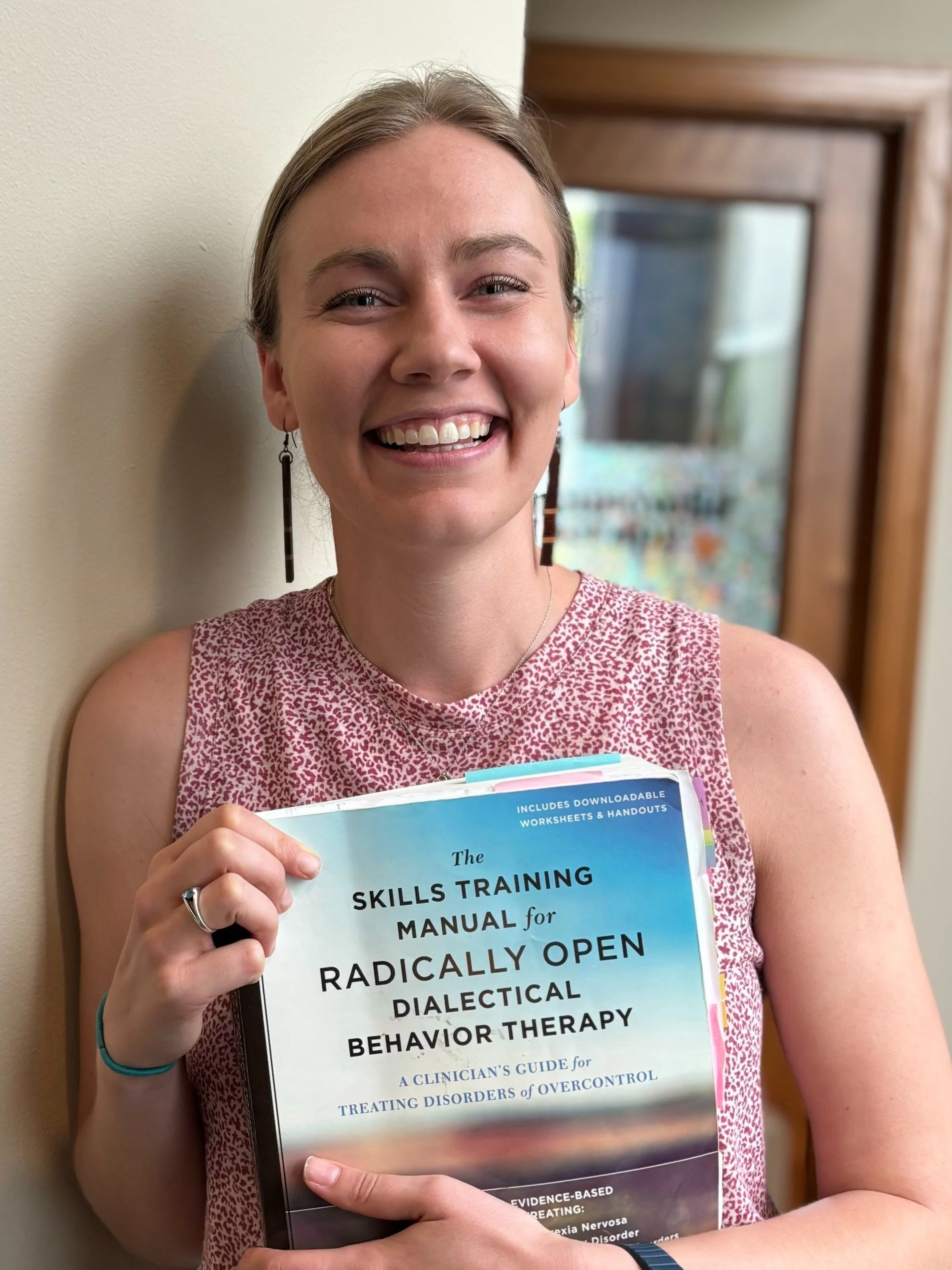
Meet Marie Monson, MA, LPCC.
Marie specializes in RO DBT at OCDMN and coordinates the program. If you are wondering whether overcontrol fits what you are experiencing, you do not need to decide that on your own before reaching out.
A free 15-minute consultation is a place to ask questions, learn more about how the program works, and talk about whether RO DBT may be worth exploring.
- Program format: virtual individual therapy + virtual group skills training
- Standard program: approximately 30 weeks, with some clients working longer
- Rates: contact Marie for current program pricing
You do not need to know whether "overcontrol" is the right word yet.
If rigidity, perfectionism, emotional inhibition, or difficulty with connection sound familiar, a consultation can help you learn more about RO DBT and whether the program may fit what you are looking for.
Start with a conversation.
Reach out to Marie with questions about the RO DBT program or to ask about a free 15-minute consultation.